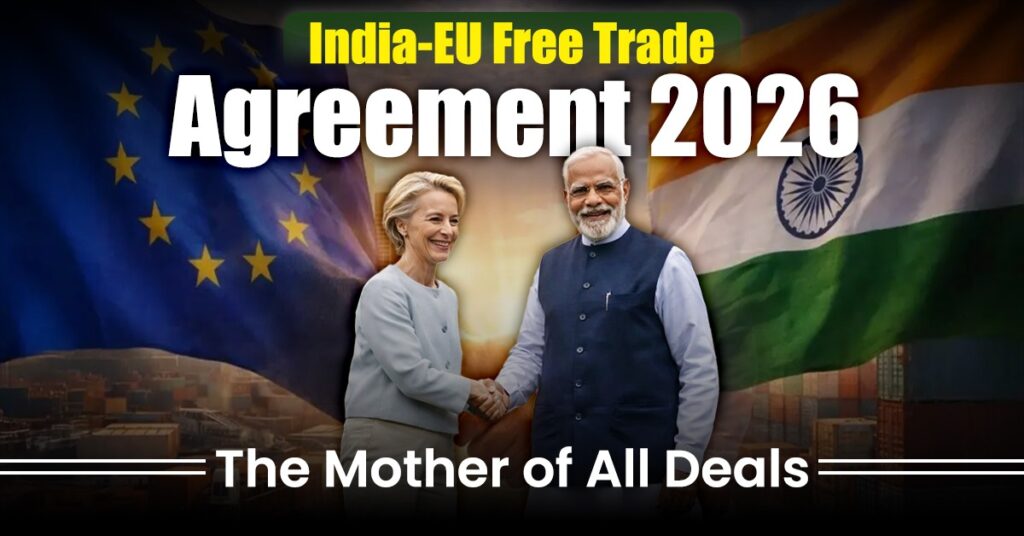
In February 2026, India and the European Union signed what many global observers including Ursula von der Leyen (President of European Commission) are calling the “Mother of All Trade Deals”, the India-EU Free Trade Agreement (FTA).
After nearly 20 years of negotiations, this landmark pact is set to reshape India’s trade, manufacturing, exports, geopolitics, and long-term economic trajectory.
Economists, industry leaders, and policymakers agree on one thing: this deal is not just about tariffs. It is about India’s integration with the world’s most regulated, high-value market and its emergence as a serious global economic power.
Let’s break down what the India-EU FTA 2026 really means, why it matters so deeply, and how it could redefine India’s future.
What is the India-EU Free Trade Agreement?
The India-EU Free Trade Agreement 2026 is a comprehensive trade pact between;
- India
- The European Union (EU), a bloc of 27 countries
Together, they represent;
- Nearly 2 billion consumers
- Around one-third of global GDP
- One of the largest trade corridors in the world
The agreement was signed in early 2026 by Indian leadership under Prime Minister Narendra Modi and the EU leadership headed by Ursula von der Leyen (President of European Commission) and Antonio Costa (President of the European Council).
Source: TLDR News EU
Why is it Called the “Mother of All Trade Deals”?
This phrase is not media hype. It reflects scale, depth, and impact. Also, it is a much-required geo-strategic development.
Key reasons behind the title;
- Covers 96–99% of goods trade between India and the EU
- Goes far beyond goods, the India-EU FTA includes services, investment, digital trade, standards, and regulations.
- Aligns India with the world’s most demanding quality and sustainability market
- Seen by economists as more transformative than India’s 1991 economic reforms when combined with India’s US trade push
As economist Arvind Panagariya noted, this agreement could fundamentally change how India participates in global trade, not as a low-cost exporter, but as a trusted manufacturing and services hub.
India-EU Trade at a Glance (Before the FTA)
| Indicator | Status |
| EU’s rank as India’s partner | Largest trading partner |
| Annual bilateral trade | € 120 billion plus |
| India’s exports to EU | Textiles, chemicals, gems, and machinery |
| EU’s exports to India | Machinery, automobiles, and medical devices |
| Tariff Levels (Before FTA) | High and uneven |
The FTA aims to remove structural friction that keeps trade below potential.
Core Pillars of the India-EU FTA 2026.
Massive Tariff Reductions
One of the most headline-grabbing aspects of the India-EU Free Trade Agreement 2026.
What changes?
- EU removes tariffs on 90% plus of Indian exports
- India reduces tariffs on around 86% of EU imports
- Remaining sensitive items see phased reductions, not sudden shocks
Indian sectors benefiting the most:
- Textiles & garments
- Leather & footwear
- Gems & jewellery
- Chemicals & pharmaceuticals
- Engineering goods
- Marine and processed food products
EU sectors gaining access:
- Machinery & industrial equipment
- Automobiles (with phased tariff cuts)
- Medical and diagnostic equipment
- Wines, spirits, and specialty foods
Services, Not Just Goods
Unlike older trade deals, the India-EU Free Trade Agreement 2026 gives serious weight to services, a major win for India.
Key focus areas;
- IT and digital services
- Professional and business services
- Financial and consulting services
- Recognition of qualifications (select sectors)
This opens doors for Indian tech firms, startups, and professionals in Europe.
Supply Chain and Manufacturing Boost
The EU is actively diversifying away from China-centric supply chains. India is a natural alternative.
The FTA helps India;
- Integrate into European manufacturing value chains
- Attract EU investment into electronics, EVs, clean energy, and precision manufacturing
- Become a reliable production base for global companies
This aligns directly with India’s Make in India and Production-Linked Incentive (PLI) strategies.
High Standards = Long-Term Gains
The EU market is known for;
- Strict quality norms
- Environmental standards
- Labour and sustainability compliance
While this raises the bar for Indian exporters, it also;
- Improves global credibility of Indian products
- Enables access to premium markets worldwide
- Pushes Indian firms up the value chain
In short: tough rules, but lasting rewards.
What about Sensitive Sectors?
A common concern around FTAs is domestic disruption. The India-EU Free Trade Agreement addresses this carefully.
Protected areas include;
- Dairy
- Certain agricultural products
- Poultry and cereals
Safeguards such as;
- Long transition periods
- Tariff quotas
- Emergency protection clauses
ensure Indian farmers and MSMEs are not exposed overnight.
Strategic and Geopolitical Importance
This deal is as strategic as it is economic.
For India it;
- Reduces dependence on any single global bloc
- Strengthens position amid global trade uncertainty
- Signals policy stability to global investors
For the EU it;
- Deepens engagement with the world’s fastest-growing large economy
- Counters over-reliance on China
- Strengthens democratic, rule-based trade partnerships
Together, the deal reshapes global economic alignment.
Why Economists Call It Bigger Than 1991 Reforms.
India’s 1991 reforms opened the economy internally. The India-EU FTA opens India externally at scale.
Comparison
| 1991 Reforms (LPG) | India-EU FTA 2026 |
| Liberalised India’s domestic economy | Integrated India’s economy globally |
| Reduced import controls | Expands export markets |
| Focus on survival | Focus on leadership |
Combined with India’s evolving US trade framework, this marks India’s next economic leap.
What Happens Next?
The agreement now moves towards:
- Ratification by EU institutions
- Approval through India’s processes
Once in force;
- Tariff cuts roll out in phases
- Businesses get time to adapt
- Trade volumes expected to rise steadily through the next decade
Most estimates suggest full impact by the early 2030s.
Why This Deal Matters for Ordinary Indians.
This is not just a “big business” agreement.
Over time, it can mean;
- More jobs in manufacturing and exports
- Better quality products made in India
- Increased foreign investment
- Stronger economic resilience
Trade deals don’t change lives overnight, but they shape decades.
Key European Imports Set to Become Cheaper Under the India–EU Trade Deal
The January 2026 India–EU Trade Agreement is expected to significantly reduce the cost of several European imports by cutting long-standing high tariffs. Products ranging from luxury cars and fine wines to gourmet foods and medical devices will become more affordable for Indian consumers as duties are phased down over the next few years.
Major Categories Seeing Price Cuts
Alcoholic Beverages
Tariffs on European wines and spirits will see steep reductions. Wine duties will drop from 150% to 75% initially, with a roadmap to reach 20% in later phases, making premium European labels far more accessible.
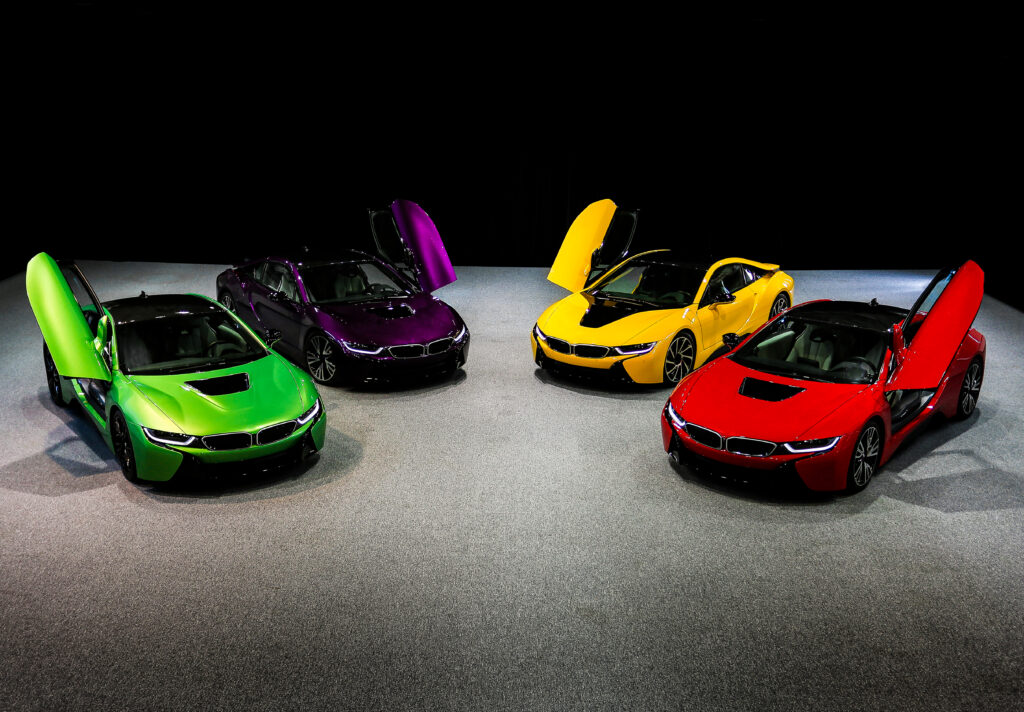
Luxury Automobiles
High-end European cars priced above €15,000 will benefit from reduced import duties. Brands such as Mercedes-Benz, BMW, and Audi are expected to see price corrections as tariffs ease, according to Forbes, NDTV and CarDekho.
Food & Gourmet Products
Imported European food items, including olive oil, pasta, biscuits, chocolates, pastries, and pet food, will gradually become cheaper. Duties as high as 50% will be reduced to zero over five years, improving affordability and variety, report Times of India and Swarajya.
Fresh Fruits
Tariffs on select imported fruits such as kiwis and pears will reduce from 33% to 10%, lowering retail prices and expanding premium fruit options for consumers.
Healthcare & Medical Devices
Nearly 90% of tariffs on medical devices, cancer treatments, and specialised pharmaceuticals will be eliminated. This is expected to reduce treatment costs and improve access to advanced European healthcare technologies, as highlighted by Swarajya and industry experts.
Textiles & Apparel
Several categories of European garments and accessories will also see duty reductions, making imported fashion and lifestyle products more competitively priced in the Indian market.
Conclusion
The India-EU Free Trade Agreement 2026 truly deserves its title as the Mother of All Trade Deals. It is ambitious, complex, and transformational. More than tariff cuts, it is about trust, standards, scale, and long-term vision.
For India, this deal signals a clear message to the world: India is ready to compete, collaborate, and lead in global trade. If executed well, the India-EU FTA could stand in history as one of the defining economic milestones of modern India.
Frequently Asked Questions
What is the India-EU Free Trade Agreement?
It is a trade deal that reduces barriers and increases trade between India and EU countries.
Why is it called the Mother of All Trade Deals?
Because of its size, depth, and long-term impact on India’s economy.
Will Indian businesses benefit from this deal?
Yes, especially exporters, manufacturers, and service providers.
Does it harm Indian farmers?
Sensitive sectors are protected through safeguards and phased changes.
When will the deal fully apply?
After ratification, with phased implementation over several years.


1 thought on “India-EU Free Trade Agreement 2026: The Mother of All Trade Deals ”