
Delhi NCR pollution crisis is no longer seasonal; it is a year-round reality. Smog, PM2.5 particles, vehicle emissions, construction dust, and indoor pollutants from cooking, furniture, and cleaning products have made clean air a luxury.
While air purifiers help, air purifying plants offer a natural, affordable, and culturally rooted solution that fits perfectly into Indian homes.
In Indian tradition, plants are not just decorative, they are considered life-giving, protective, and healing. Modern research also supports their ability to absorb toxins, improve oxygen levels, and enhance indoor air quality.
Impact on Life Expectancy and People
- According to the Air Quality Life Index 2024 Report residents of Delhi NCR are projected to lose an average of 11.9 years of life expectancy due to current air pollution levels if exposure continues. (Energy Policy Institute at the University of Chicago)
- WHO stated around 1.8 crore people of Delhi NCR are getting affected significantly with hazardous air pollution especially from PM2.5 air particles. It will cause lose of nearly 8.5 years of their lives.
(Source: NDTV)
Top 10 Air Purifying Plants for Healthy Living in Delhi NCR Pollution
Below are the top 10 air purifying plants ideal for Delhi NCR pollution crisis, along with tips to grow them, why they work, and where to place them for maximum impact. Healthy and clean air helps to minimise adverse impact on life expectancy of these harmful air particles.
Areca Palm (Chrysalidocarpus / Supari Palm)
Why it’s good
- Absorbs airborne toxins like formaldehyde and benzene
- Releases high oxygen levels and improves humidity
- Excellent for combating dry, polluted indoor air
Where to place
- Living room or near large windows
- As per Vastu, place in the east or south-east direction for positive energy
Tips to keep it growing
- Bright, indirect sunlight
- Water 2 to 3 times a week; keep soil slightly moist
- Wipe leaves regularly to remove Delhi dust

Source: Ugaoo
Snake Plant (Sansevieria / Nagpatti / Saas-Bahu Plant)
Why it’s good
- Converts CO₂ into oxygen even at night
- Filters toxins like nitrogen oxides and formaldehyde
- Ideal for bedrooms during high pollution days
Where to place
- Bedroom or study area
- Vastu suggests placing it near entrances to block negative energy
Tips to keep it growing
- Thrives in low light and low maintenance
- Water only when soil is completely dry
- Perfect for busy urban households
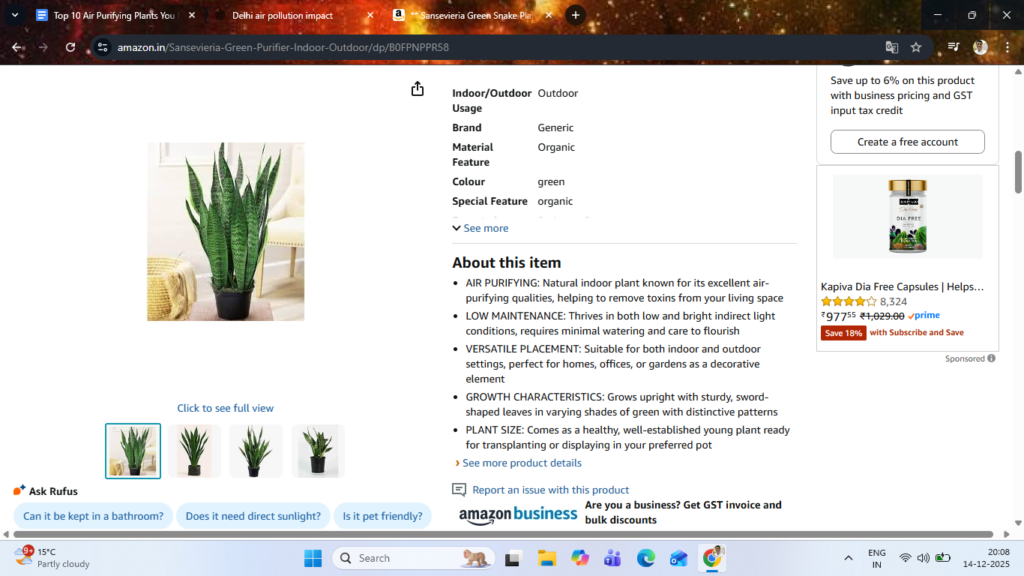
(Source: Amazon)
Tulsi (Holy Basil / Vrinda)
Why it’s good
- Absorbs sulphur dioxide and nitrogen dioxide
- Strong antibacterial and antiviral properties
- Considered sacred in Indian culture and Ayurveda
Where to place
- Balcony, terrace, or near a sunny window
- Traditionally placed in the north-east (Ishaan) direction
Tips to keep it growing
- Needs 4 to 6 hours of sunlight daily
- Water daily but ensure good drainage
- Regular pruning keeps it healthy

(Source: Amazon)
Peace Lily (Spathiphyllum / Shanti Pushp)
Why it’s good
- Removes mould spores, formaldehyde, and VOCs
- Improves indoor humidity, helpful during smog season
- Helps reduce stress and improves sleep quality
Where to place
- Bedroom, office desk, or near electronic devices
- Vastu favours it in calm zones like bedrooms
Tips to keep it growing
- Low to medium light
- Water when soil feels dry
- Drooping leaves indicate need for water
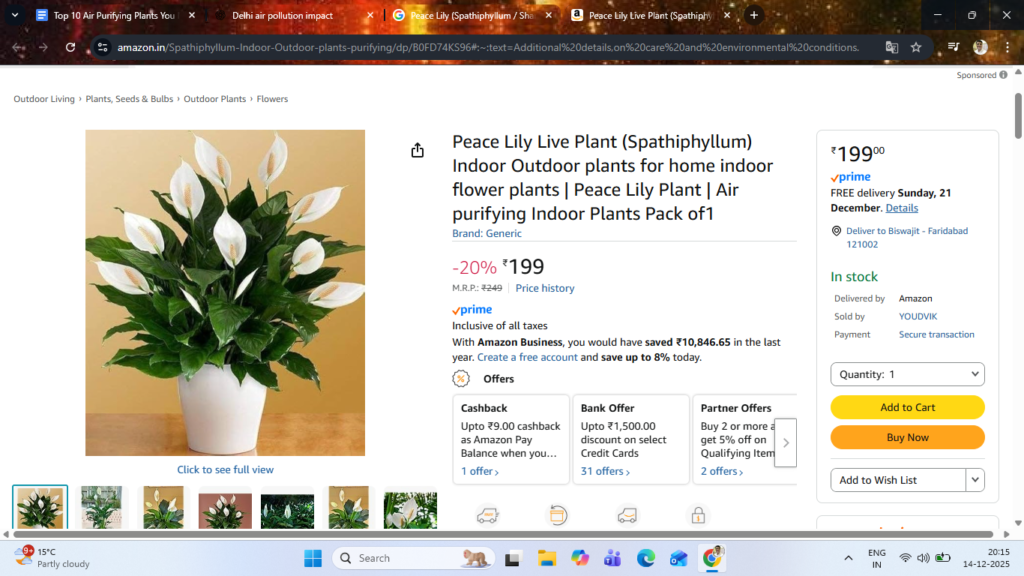
(Source: Amazon)
Aloe Vera (Gheekunwar / Ghritkumari)
Why it’s good
- Absorbs benzene and formaldehyde
- Releases oxygen at night
- Dual benefit: air purifier and medicinal plant
Where to place
- Kitchen window, bedroom, or balcony
- Vastu recommends the north or east direction
Tips to keep it growing
- Requires direct sunlight
- Water sparingly
- Use sandy, well-drained soil

(Source: Amazon)
Money Plant (Epipremnum aureum / Pothos / Devil’s Ivy)
Why it’s good
- Filters indoor toxins and improves air quality
- Reduces dust particles inside homes
- Symbol of prosperity in Indian households
Where to place
- Near windows, on shelves, or hanging baskets
- Best placed in the south-east corner as per Vastu
Tips to keep it growing
- Grows well in water or soil
- Change water weekly if grown in bottles
- Avoid harsh direct sunlight

(Source: Nature Nursery)
Rubber Plant (Ficus elastica / Rubber Fig)
Why it’s good
- Large leaves trap dust and airborne particles
- Effective in reducing indoor air pollution
- Improves oxygen circulation
Where to place
- Living room corners or near balconies
- Avoid bedrooms due to strong energy presence (Vastu)
Tips to keep it growing
- Bright, indirect light
- Clean leaves weekly
- Moderate watering
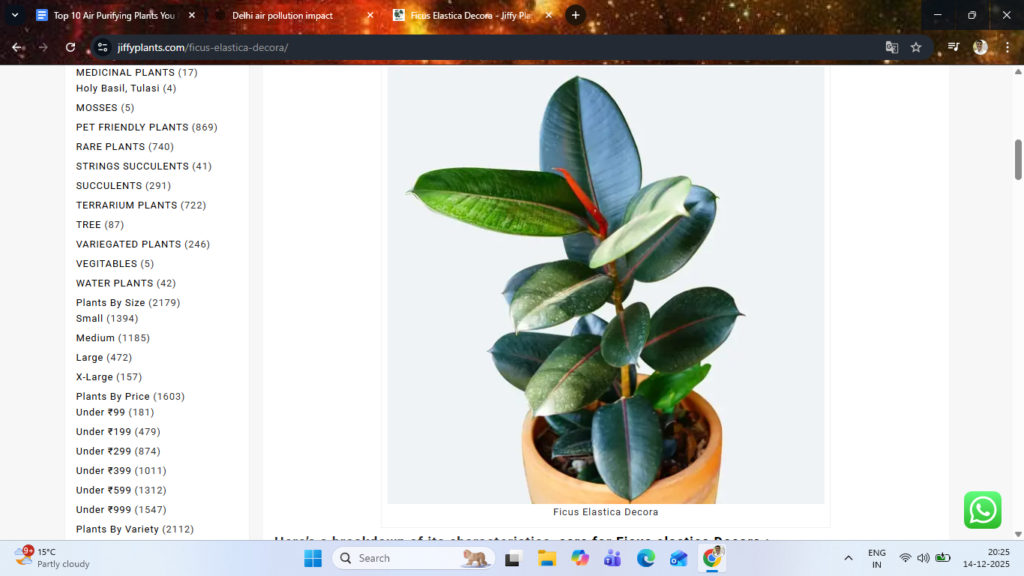
(Source: Jiffy Plants)
Spider Plant (Chlorophytum comosum / Ribbon Plant)
Why it’s good
- Removes carbon monoxide and formaldehyde
- Safe for children and pets
- Ideal for Delhi homes with limited ventilation
Where to place
- Kitchen or near windows
- Works well in hanging baskets
Tips to keep it growing
- Indirect sunlight
- Water twice a week
- Trim brown tips regularly

Source: Ugaoo
Boston Fern (Nephrolepis exaltata / Sword Fern)
Why it’s good
- Acts as a natural humidifier
- Filters indoor air pollutants effectively
- Useful in AC-heavy homes during pollution season
Where to place
- Bathroom with indirect light or living room
- East-facing rooms are ideal as per Vastu
Tips to keep it growing
- Loves humidity
- Mist leaves frequently
- Keep soil consistently moist

(Source: Amazon)
Gerbera Daisy (Gerbera jamesonii / African Daisy)
Why it’s good
- Absorbs benzene and trichloroethylene
- Releases oxygen at night
- Bright flowers uplift mood during gloomy smog days
Where to place
- Bedroom windowsill or balcony
- Avoid dark or poorly ventilated corners
Tips to keep it growing
- Needs bright sunlight
- Water when topsoil dries
- Ensure proper drainage
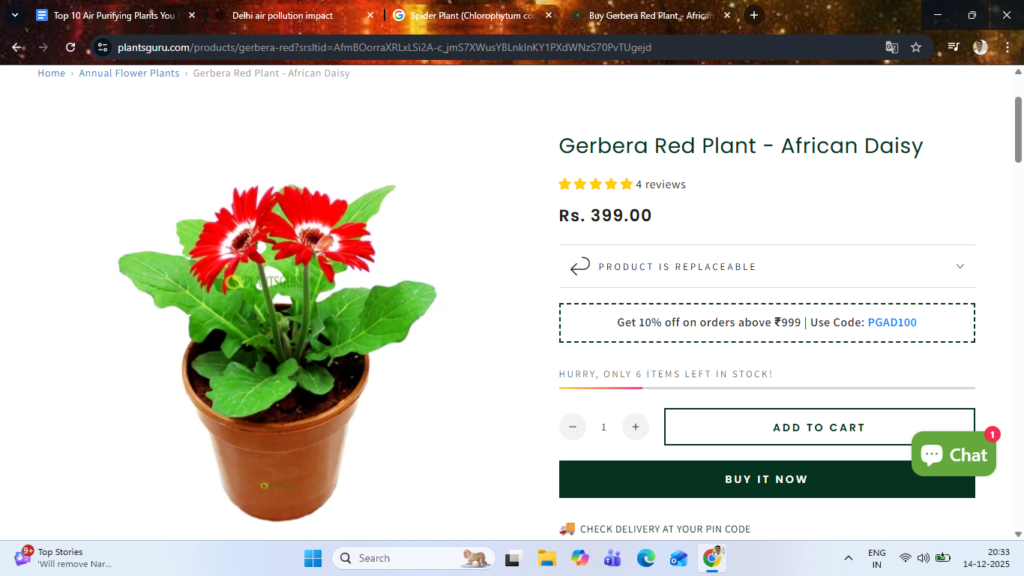
(Source: Plants Guru)
Why Air Purifying Plants Matter in Delhi Pollution
With Delhi pollution levels frequently crossing “severe” AQI (Max. AQI was 478 in Jahangirpuri and Vivek Vihar on 13th Dec 2025), indoor air can often be more toxic than outdoor air. Air purifying plants act as natural filters that complement air purifiers by;
- Reducing indoor toxins
- Improving oxygen circulation
- Adding humidity to dry polluted air
- Supporting mental and emotional well-being
They also align with Indian culture and Vastu Shastra, bringing harmony, positivity, and balance to homes.
Source: Garden Vibes
Conclusion
The Delhi NCR pollution crisis demands immediate yet sustainable action. While machines help, nature offers a timeless solution. By incorporating air purifying plants into your home, you not only improve clean air indoors but also reconnect with India’s cultural wisdom of living in harmony with nature. With correct placement and basic care, these plants can significantly reduce the impact of Delhi pollution on daily life.
Frequently Asked Questions
Can air purifying plants really help during Delhi pollution?
Yes, they reduce indoor toxins and improve air quality, especially when combined with ventilation and air purifiers.
How many plants are needed for effective clean air indoors?
Ideally, one plant per 100 sq. ft. of indoor space.
Are these plants safe for Indian homes with children?
Most are safe, but Aloe Vera and Rubber Plant should be kept out of reach of toddlers.
Can plants replace air purifiers in Delhi NCR?
No, plants complement air purifiers and enhance overall indoor air quality.
Which plant is best for bedrooms in high pollution areas?
Snake Plant, Aloe Vera, and Gerbera Daisy are ideal for bedrooms.


