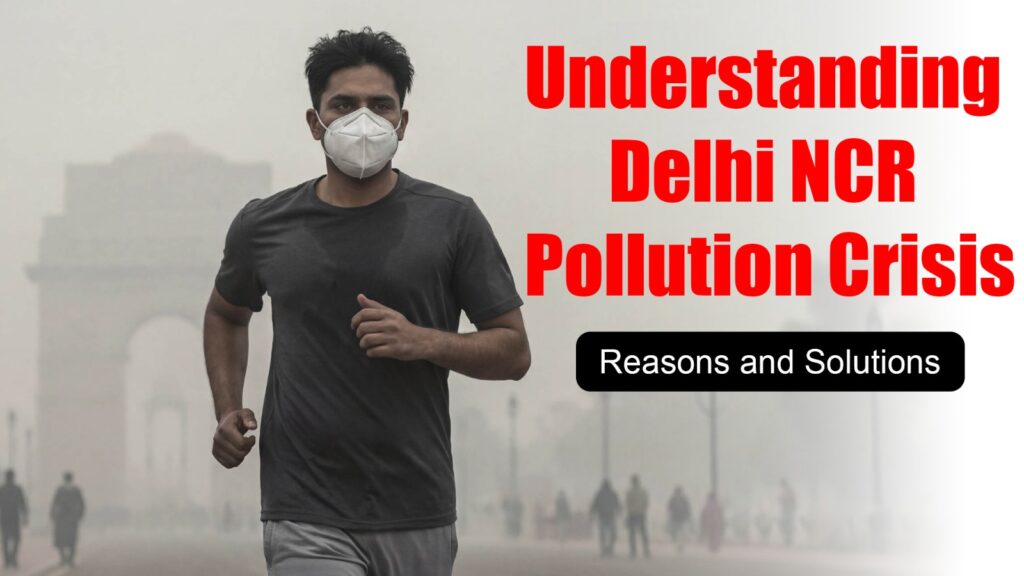
The Delhi NCR Pollution Crisis is no longer a seasonal headline; it has become a yearly health emergency. Every winter, pollution in Delhi spikes, smog covers the city, and AQI numbers shoot into the very poor and severe range. People cough more, their eyes burn, and children and the elderly struggle to breathe.
The impact is now evident more than ever.
- People, including social activists, doctors, and common people, gathered near India Gate to protest against severe air pollution in November 2025. (The Hindu)
- Doctors like Dr Gopi Chand Khilnani and Dr Randeep Guleria are advising people with chronic lung and heart issues, the elderly, and children to leave Delhi NCR during the peak winter months (Late Nov to January), if possible. (Mint)
- Average AQI has been Poor to Severe Range (150 to 300 plus) during Nov-Dec 2025 in Delhi NCR.
- N95 Masks, Air Purifiers, and Air Purifying Plants are at an all-time high in demand.
It’s time to take it seriously as a society. To do the same, this blog is my effort to help you understand what it actually is, the reasons behind it, solutions, and more. Let’s begin.
In this blog, we will explain the Delhi NCR pollution problem in simple words, what is happening, why it happens every year, what the latest data says (including the Ethiopian volcano story), and what solutions are possible.
How bad is the Delhi NCR Pollution crisis right now?
Continuing the above trends about AQI, here is how bad the situation is as per recent trends;
- On 29 November 2025, Delhi’s average AQI was around 338, in the very poor category. The city has faced ‘very poor’ to ‘severe’ air quality for over 14 consecutive days.
- On another recent day, the average AQI hit 341, again firmly in the very poor range, and residents spent over half of November in this category.
- Several monitoring stations in Delhi recently recorded AQI above 400, which falls into the severe category. In Noida, most stations also recorded severe levels.
- From 1–15 November 2025, Delhi’s average AQI was 348, technically the “best” early November in three years, but still very poor and unsafe to breathe.
Source: The Indian Express
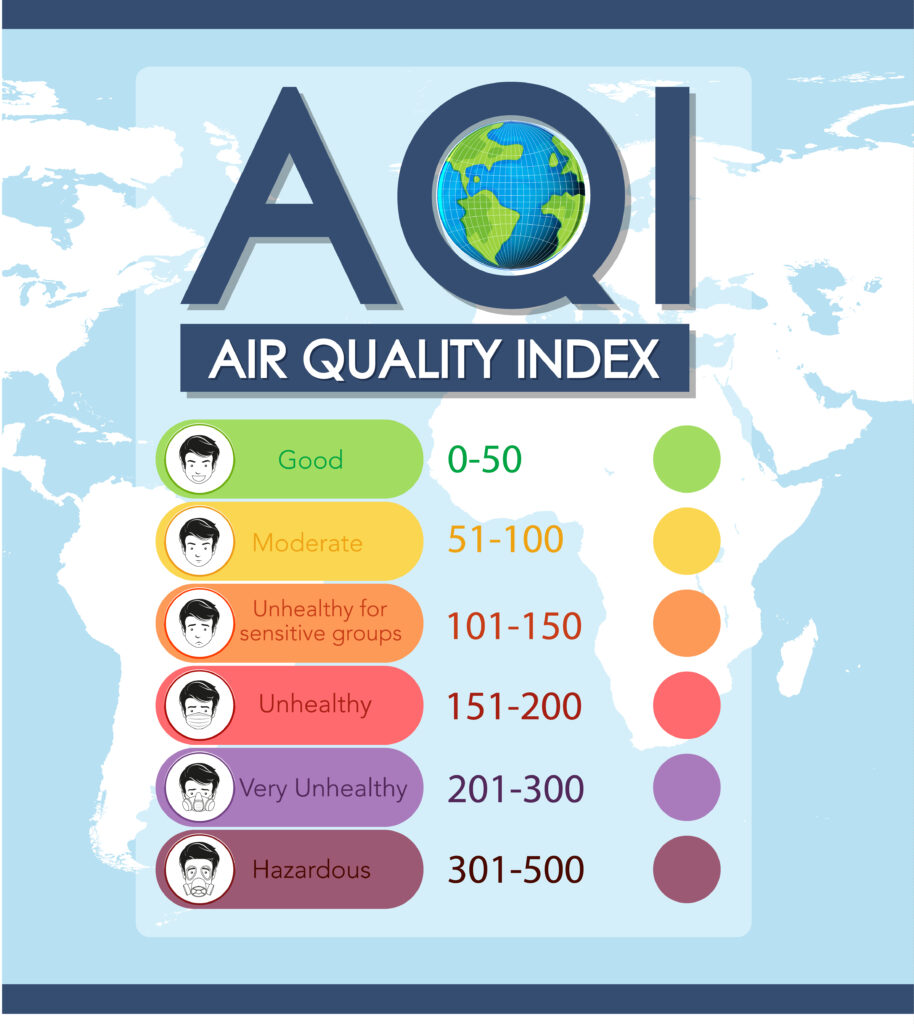
India’s Official AQI Scale
| Category | AQI Range |
| Good | 0-50 |
| Satisfactory | 51-100 |
| Moderate | 101-200 |
| Poor | 201-300 |
| Very Poor | 301-400 |
| Severe | 401-500 |
(Sources: CPCB and India Air Quality Index)
This is why people talk about smog, a toxic mix of smoke and fog that reduces visibility and harms health. We are breathing pollution, and it’s high time for the government to step in with sustainable measures and strict implementation timelines.
Why is Pollution in Delhi NCR so high?
There is no single reason. The Pollution Crisis in Delhi NCR is a mix of local emissions, regional activities, winter weather, and the geographical location.
Vehicles
- Delhi alone has over 1.5 crore registered vehicles. If we include the entire NCR areas like Noida, Greater Noida, Gurugram, and Faridabad, the numbers will grow significantly.
- There are lakhs of two-wheelers, autos, buses, trucks, and more. Collectively, crores of vehicles are running daily on Delhi NCR roads.
- Vehicles exhaust emits PM2.5, PM10, NOx and several other pollutants.
- According to a report published by the Times of India, transport contributed around 18% to Delhi NCR’s pollution crisis.
Even with BS-VI fuels, odd-even experiments, electric vehicles, and CNG buses, vehicle emissions remain a key part of Delhi NCR Pollution.
Industry and Power
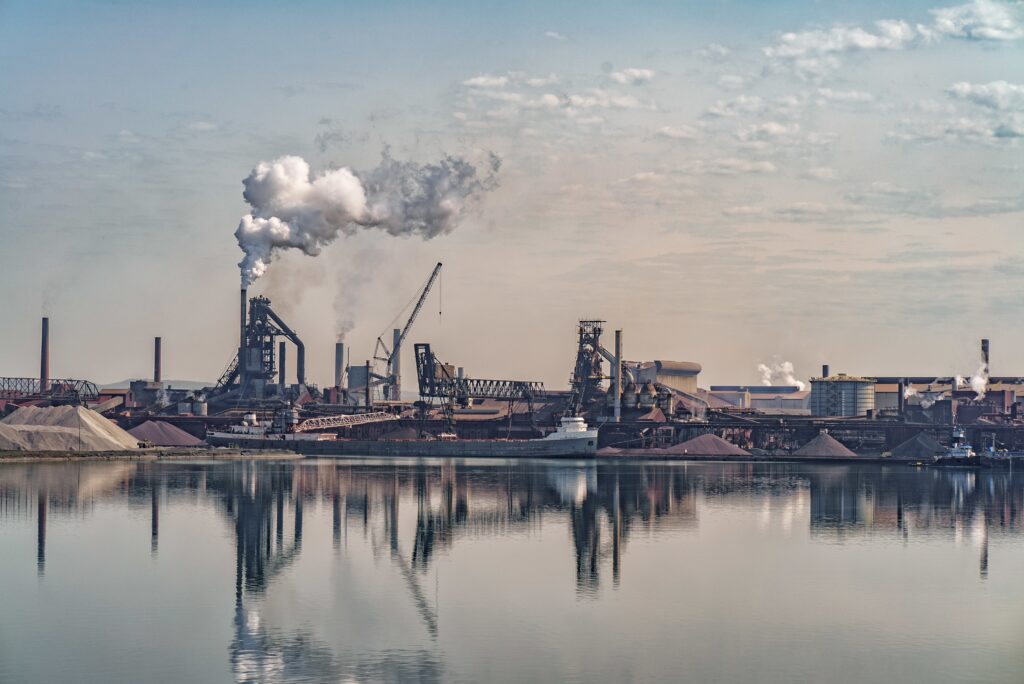
- Industrial units, small factories, brick kilns, and power plants around NCR release smoke and gases.
- According to a Times of India article, around 51,837 factories in Delhi are operating from residential or non-comforming areas. It is a major cause of pollution, making industrial and residential areas similar on the AQI index.
- Some use dirty fuels (like unclean coal or other solid fuels).
- Delhi NCR has several industrial areas across Delhi (9000+ registered factories as of 2022), Faridabad (15000+ units), Sahibabad-Ghaziabad, and Manesar.
- Kanjhawala, Ranikhera, and Baprola are developing into new industrial hubs, especially for AI and Biotech.
- On several winter days, industrial and residential sources together account for a major share of the pollution load, comparable to or exceeding that from vehicles.
These thousands of industrial units contribute significantly to the overall polluted air of Delhi NCR.
Construction and Road Dust
- Ongoing construction, demolition, roadwork, and uncovered building materials generate significant amounts of dust (PM10).
- Busy roads, potholes, and the lack of regular mechanical sweeping contribute to road dust.
- In winter, when wind speeds drop, this dust stays near the ground and contributes to smog.
Household and Local Burning
- Burning of waste, plastic, leaves and biomass in open areas is still common, especially in the outer NCR.
- In some low-income settlements, people use solid fuels for cooking or heating.
- These local fires release fine particles and toxic gases directly into the air we breathe.
Stubble Burning
- Every year, farmers in Punjab, Haryana and western UP burn crop residue.
- In 2025, on at least one analysed day, stubble burning contributed only about 1.2% to Delhi’s pollution.
- But on other days, especially when the wind blows towards Delhi, this share can rise. Overall, stubble burning is a seasonal but essential contributor.
According to recent reports, stubble burning incidents in Punjab (around 5114), Haryana (around 662), and Western UP have decreased significantly in 2025 compared to 2024. The major reasons for this year’s lower stubble burning are government efforts, awareness campaigns, and other measures.
Geography and Winter Weather
- Delhi is landlocked and surrounded by industrial and agricultural regions.
- Winter inversion traps cold air (and pollution) near the surface.
- Low wind speed and no rain mean pollutants are not dispersed or washed away.
So even if emissions are constant, winter weather turns Delhi NCR Pollution into a full-blown crisis.
Source: Abhi and Niyu
Are the AQI numbers even correct? The monitoring problem.
You might assume every corner of Delhi NCR is well monitored. That is not true.
Delhi has 39 continuous monitoring stations, the highest for any Indian city. But a recent report from the Centre for Science and Environment (CSE) found that only about 26% of Delhi’s area has a monitoring station within 2 km; 74% is in a “data shadow”. Even with a 5 km radius, around a quarter of the city remains unmonitored.
This means:
- Some outer and fast-growing suburbs have poor data.
- Official averages may miss local hotspots, such as busy crossings or industrial belts.
- Pollution in Delhi NCR could actually be worse in some places than the numbers show.
Better data is essential to properly manage the Pollution Crisis.
Ethiopian volcanic eruption: Did it worsen Delhi NCR Pollution?
In late November 2025, the Hayli Gubbi volcano in Ethiopia erupted for the first time in thousands of years. It sent an ash plume up to 8.5–15 km into the atmosphere, which drifted towards India.
This created two big worries:
- Will the volcanic ash make Delhi’s smog worse?
- Is this why pollution in Delhi and other cities is so high?
What science and IMD say.
- The India Meteorological Department (IMD) clearly stated that the ash cloud was only in the upper troposphere, at high altitudes.
- IMD officials said the ash affected flights but did not impact surface weather or air quality.
- The ash plume later moved away towards China, exiting Indian skies.
- Analysis from Indian media and experts also noted that on the streets of New Delhi, volcanic ash did not contribute to the winter pollution – the problem remained local emissions and weather.
So, no, the Ethiopian volcano is not responsible for the Delhi NCR Pollution Crisis. It disrupted aviation, not your local AQI.
What is being done to control or minimise the Delhi Pollution Impact? GRAP and other measures
To manage Pollution in Delhi, authorities use the Graded Response Action Plan (GRAP), a set of steps activated based on AQI levels:
- Stage I (Poor: 201–300) includes basic measures such as stopping open burning, dust control, and increased public transport.
- Stage II (Very Poor: 301–400) includes tighter controls on construction dust, diesel generator use, and traffic management.
- Stage III (Severe: 401–450) includes suspending most construction and demolition activities and imposing stricter curbs on vehicles and industries.
- Stage IV (Severe+ / Emergency) includes emergency actions such as a ban on truck entry (except for essentials), the shutdown of specific industries, and the closure of schools, etc.
Source: GRAP
Source: StudyIQ IAS
These short-term curbs help a little but are not enough to solve the Pollution-led health crisis.
Long-term Solutions to the Delhi NCR Pollution Crisis
To reduce smog and improve air quality in a lasting way, Delhi NCR needs a mix of strong policies and daily behaviour changes.
Government and Policy-level Solutions
- Cleaner and fewer vehicles
- Expand metro, buses, and last-mile connectivity so people actually prefer public transport.
- Promote EVs and cleaner fuels, especially for taxis, autos and delivery fleets.
- Better traffic management and smoother roads to reduce idling and congestion.
Cleaner Industry and Power
- Strict enforcement of emission norms for factories and power plants in Delhi and the surrounding NCR.
- Support for industries to shift to cleaner fuels and technologies.
- Regular, transparent audits with penalties for violators.
Construction and Dust Control
- Mandatory dust barriers, water sprinkling, and material covering at all sites.
- Heavy fines and work stoppage for sites that do not follow norms.
- Mechanised road sweeping on significant highways and better maintenance of pavements.
Agriculture and Stubble Management
- Provide farmers with real alternatives, such as crop residue management machines, mulching incentives, and buy-back programmes.
- Work with Punjab, Haryana and UP in a regional action plan, not just blame-shifting.
Better Centralised Monitoring and Data Management
- Add more monitoring stations in outer and underserved areas, as highlighted by the CSE report.
- Integrate satellite data and low-cost sensors for finer local readings.
- Share real-time data openly to guide local action and public behaviour.
Urban Planning and Green Cover
- More urban forests, roadside trees, and green buffers near highways and industrial belts.
- Reduce unplanned sprawl and protect existing green zones.
Source: Drishti IAS
What Can Citizens Do?
One person cannot fix the Delhi NCR Pollution Crisis, but millions of small actions do add up.
- Limit private car use and use carpool, metro, buses, shuttles, or shared mobility.
- Avoid burning waste, leaves or plastic; report such burning to local authorities.
- Follow construction rules if you are building or renovating, like covering materials and controlling dust.
On very bad smog days:
- Use a certified N95/N99 mask when outdoors.
- Keep windows closed during peak pollution hours (usually 7 am to 9 am and 6 pm to 8 pm), and ventilate when AQI improves.
- If possible, use an air purifier at home or at the workplace, especially for children, the elderly, and those with asthma or heart disease.
- Support and demand stronger policies, better public transport and cleaner energy from governments.
Conclusion
The Delhi NCR Pollution Crisis is real, serious, and mostly home-made. The latest numbers show AQI stuck in the very poor and sometimes severe range for weeks, with smog turning the city into a gas chamber. The smog you breathe is mainly from vehicles, industry, dust, household burning, stubble, and winter weather, combined with weak enforcement and patchy monitoring.
The good news: because the main sources are local, local action can fix it. With strong long-term policies, regional cooperation, honest data, and responsible daily choices, it is possible to imagine a winter in which Delhi NCR Pollution is no longer an annual health emergency.
FAQs on Delhi NCR Pollution
What AQI level is considered safe in Delhi NCR?
AQI between 0 and 50 is good, and 51 to 100 is satisfactory. Anything above 100 means rising health risk, and above 300 (very poor and severe) is unsafe, especially for children, the elderly and people with health issues.
Is the Ethiopian volcanic eruption contributing to the current Pollution in Delhi?
No. IMD and experts clearly state that the volcanic ash remained in the upper atmosphere and only affected flights, not surface air quality or weather in Delhi NCR. Local emissions are the leading cause of the Pollution Crisis.
Why is pollution worse in winter than in summer?
In winter, cool air, low wind speeds and temperature inversion trap pollutants close to the ground. With no rain and little ventilation, smoke, dust, and vehicle emissions accumulate, creating thick smog.
Does staying indoors fully protect me from Delhi NCR Pollution?
Not fully. Outdoor air seeps indoors, so indoor air can also be polluted. But staying indoors during peak smog hours, using air purifiers, and keeping windows closed during high-pollution periods can reduce exposure.
What simple steps can I take to reduce my own contribution to Pollution in Delhi?
Use public transport or carpool, avoid open burning of waste, follow dust control if you are building, conserve energy at home, and support policies for cleaner fuels and better public transport.


2 thoughts on “Understanding Delhi NCR Pollution Crisis: Reasons and Solutions.”